
Dot org is not not for profit
There is no restriction on who can register a .org domain. Capital G Good organizations, capital B Bad organizations, and everyone in between are welcome to have .org websites.
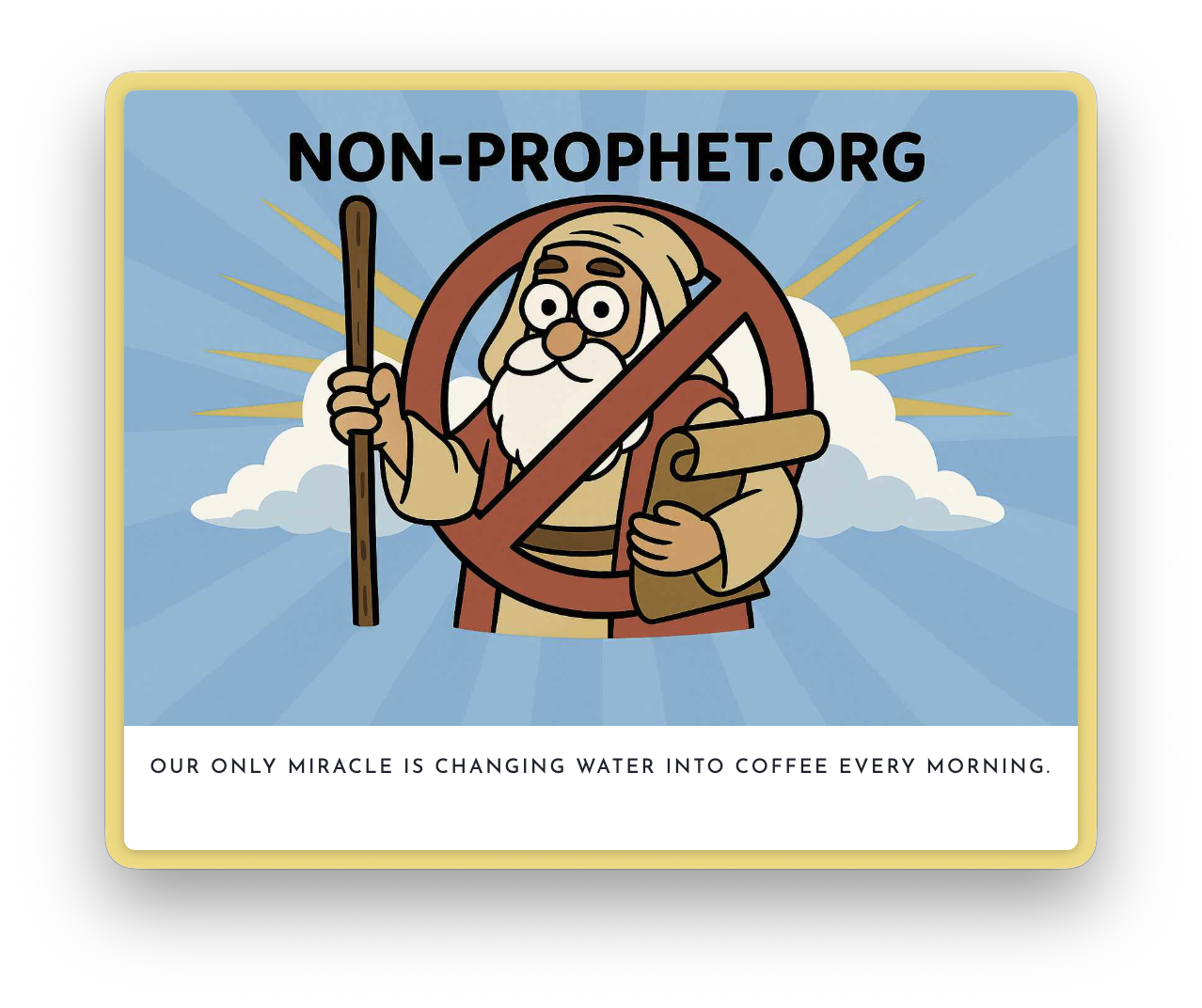
So we end up with everything from the Internet Archive at archive.org, to Facebook’s Internet.org digital colonialism1, to whatever non-prophet.org is—all signaling, or hiding, behind a dot org facade.
When domain registration first opened to the public in 1993, .org was reserved for nonprofit organizations. Likewise, .com was for commercial businesses and .net was for Internet infrastructure companies. But when demand for domains quickly overwhelmed the administrative capacity of Network Solutions (the first registrar), they stopped bothering to enforce the extension semantics. (Although .edu, .gov, and .mil from that first batch of TLDs are still restricted.)
So any company branding itself with a .org can profit as they wish, but what about the registry that sells and maintains those .org domains?
Wholesale prices for .org domains will increase from $9.93 to $11.00 on June 1 of this year—the first increase since 20162. Small potatoes, maybe, but reading about this pulled me down the .org rabbit hole wherein: dot org was nearly sold to a private equity buyer in 2019 until the California attorney general questioned the deal, preventing likely approval by ICANN, the governance body meant to exist outside of government control (read: outside US control).
Before elaborating on dot org’s history, here’s the gist:
.orgwas supposed to be for nonprofits...- ...but soon anyone could have a
.orgwebsite. - In 2019
.orgsold to private equity. - They probably would’ve charged more for
.orgdomains. - ICANN said, “looks good to me.”
- The U.S. legal system said, “not so fast.”
The crux of the dot org drama started in 2019. The .org TLD is owned and run by the Public Interest Registry (“PIR”, commonly), a 501(c)(3) formed in 2002 with a stated mission to support the free and open Internet. It’s right there in the name: they ostensibly serve the “public interest.” Before that, Verisign owned and operated .org along with .com and .net (which together pull in over $1.5 billion each year).
In 2019, PIR and ICANN agreed to a new Registry Agreement (the contract that says how much they’re allowed to charge for domains) that removed price caps on .org domains. Before that, PIR was allowed to raise prices 10% per year. They hadn’t raised prices since 2016, though, so nbd?
Andrew Allemann foreshadowed why it would be a Big Deal in two articles about the price cap removal.
The good news is that Public Interest Registry’s management is competent and well-guided...But management changes. Boards change. And one day, it could get ugly.
And if one of these registries decides to sell itself to a private equity group or another company? All bets are off.
Just a few months later, PIR announced a sale to private equity buyer Ethos Capital for over a billion dollars. And Ethos’s leadership included the ex-CEO of ICANN Fadi Chehadé. It smelled very much like regulatory capture. Only six of 3,000 public comments during ICANN’s open comment period were in favor of removing price caps. And that was before the sale was announced. “The comment period was a farce,” as Andrew said.
The comments on Andrew’s article—which, again, was before the private equity news broke—were colorful to say the least:
this is a f**** disgrace. can’t believe the shenanigans. icann is now just a joke
---
Public Interest Registry MY ARSE!
---
Why do they bother taking comments? They are always ignored.
---
Way to go ICANN! Dictatorship at it’s finest!
Like any semi-anonymous internet forum, there were some real grab-the-popcorn arguments. Kevin Murphy called the regulatory capture argument “flimsy,” to which an anonymous “John” replied:
Spoken like the tool of establishment, oligarchy and plutocracy I have always considered you to be.
To which Kevin replied:
Spoken like an anonymous coward, as I have always considered you to be.
Kevin’s own article on ICANN’s explanation pointed to ICANN itself—not PIR nor other registries—pushing for the change to remove price caps. He suggested that ICANN wanted “to make its life easier and stay out of price regulation.” It also sounds like ICANN wanted a level playing field for .org and the new (2012) gTLDs, which doesn’t make a whole lot of sense since .org had first mover advantage and a captive audience of registrants (because domain switching costs are so high). Some commentary suggested that Verisign had the most to gain from the removal of .org price caps, which I’m guessing has to do with that decision’s portent on .com price caps.
Concerns about private equity taking over and squeezing profits out of .org never had the chance to materialize, though, once the California attorney general stepped in.
Even though ICANN has a multistakeholder governance model where governments are supposed to be just another stakeholder, it is still a nonprofit under California jurisdiction. ICANN has been trying to unwind outsize US control and influence for years, but its California nonprofit status is a major concrete roadblock. (There are other, less concrete roadblocks like the disproportionate number of Board members either from the US or working for US-based organizations.)
So in 2020, when it looked like ICANN would approve PIR’s sale to private equity, California AG Xavier Becerra notified the ICANN board that it should reject the takeover.
ICANN must exercise its authority to withhold approval.
ICANN ended up rejecting the deal to prioritize “public interest” over “the interests of [Ethos’s] corporate stakeholders,” but it’s hard to argue that it wasn’t a direct result of Becerra’s challenge.
Even many opponents of the deal worried that it set a dangerous precedent for the US meddling in ICANN governance. Geopolitical conflict is unavoidable when making the rules for Internet domains (e.g. in February 2022, Ukraine asked ICANN to shut down Russian domains .ru and .рф, and ICANN declined). I have a lot more to learn and unpack as I continue to research and write the book.
It’s odd that so much drama led to so little concrete change in this case. As Andrew pointed out, $11.00 today is equivalent to about $8.50 in 2016, so June’s price increase seems completely reasonable at face value. Had PIR or Ethos raised prices just 10% per year since 2016 we’d already be passing $20.
But even without much tangible change in who runs .org or how much they charge, its history colors the picture of domain governance friction between ICANN and the U.S. government and the broader question of how financialized domains and the Internet should be.
As a caveat and a call for replies: I wasn’t paying attention when the dot org sale happened then didn’t in 2019, and I certainly wasn’t around when PIR was formed in 2002. I know these things are complex and that I’ve only scratched the surface here. To that end, I want to get it right in my book, so if you have thoughts and/or personal experience to share, please do reply.
Footnotes
(1) Internet.org was broadly criticized as Facebook’s veiled digital colonialism. It was not neutral, not secure, and not the Internet.
(2) You can register a domain for up to 10 years, so before June any .org registrants can lock in the $9.93 renewal price through 2036. Without any new registrations nor expirations, the 11.5m currently registered .org domains would generate between ~$114m and ~126m in revenue. An estimated ~77% of registrants renewed last quarter.